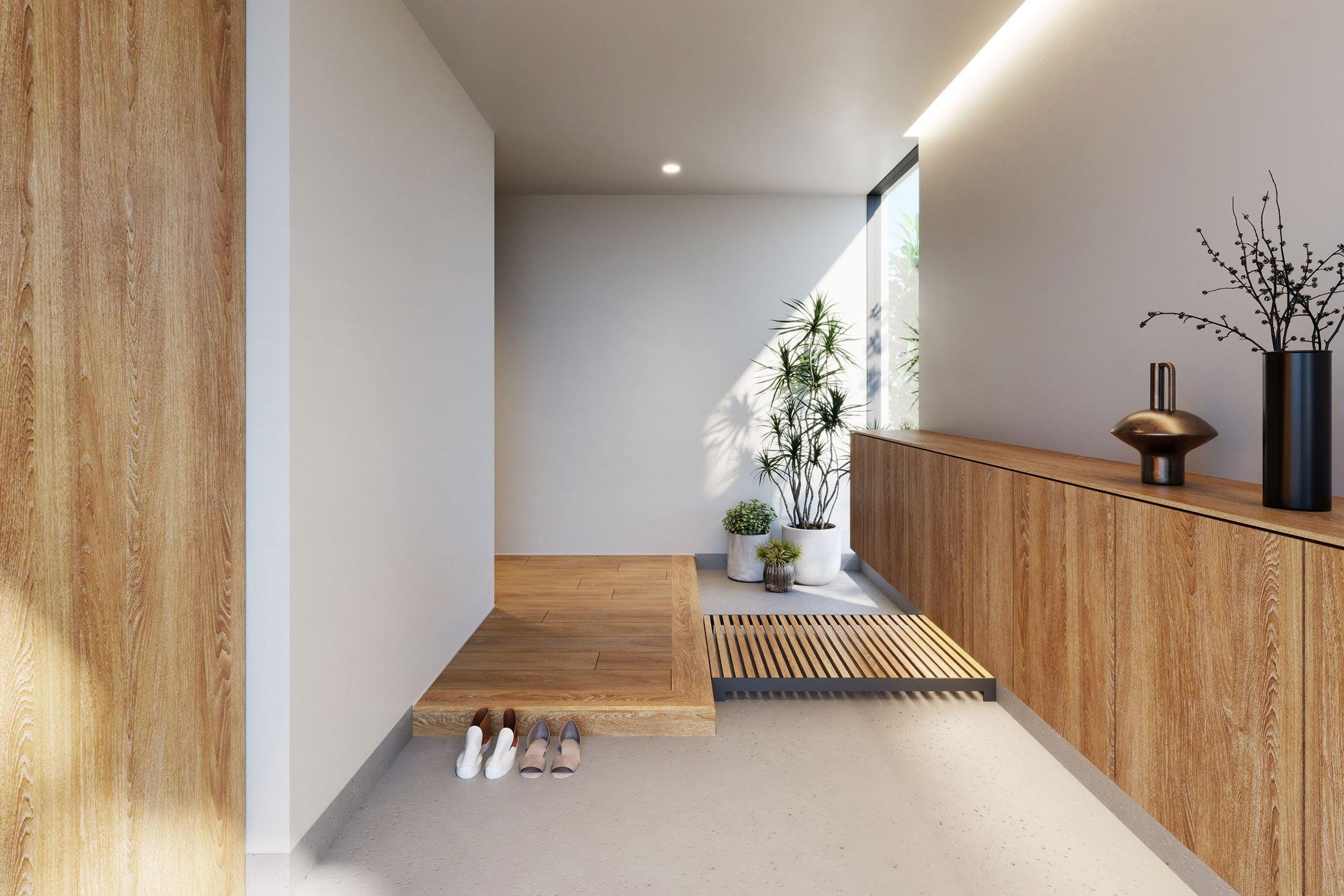
In summer, when humidity clings to clothing and city streets radiate stored heat long after sunset, the genkan becomes even more meaningful. It marks the precise moment the outside world is left behind.
More Than an Entrance
Western architecture often treats entrances as transitional spaces—a hallway to pass through as quickly as possible.
The Japanese genkan asks you to pause.
Shoes are removed carefully, aligned with intention, facing the door for the next departure. The body lowers slightly as one steps up into the home. The action takes only seconds, yet it changes posture, pace, and mindset.
Without saying a word, the architecture encourages respect: for the house, for its occupants, and for the invisible boundary between public life and private sanctuary.
Summer Begins at the Door
Japanese summers are intense.
Rainy season leaves the air saturated with moisture. Cicadas fill neighborhoods with an almost hypnotic soundtrack. Clothing becomes damp during even short walks.
The genkan quietly absorbs this reality.
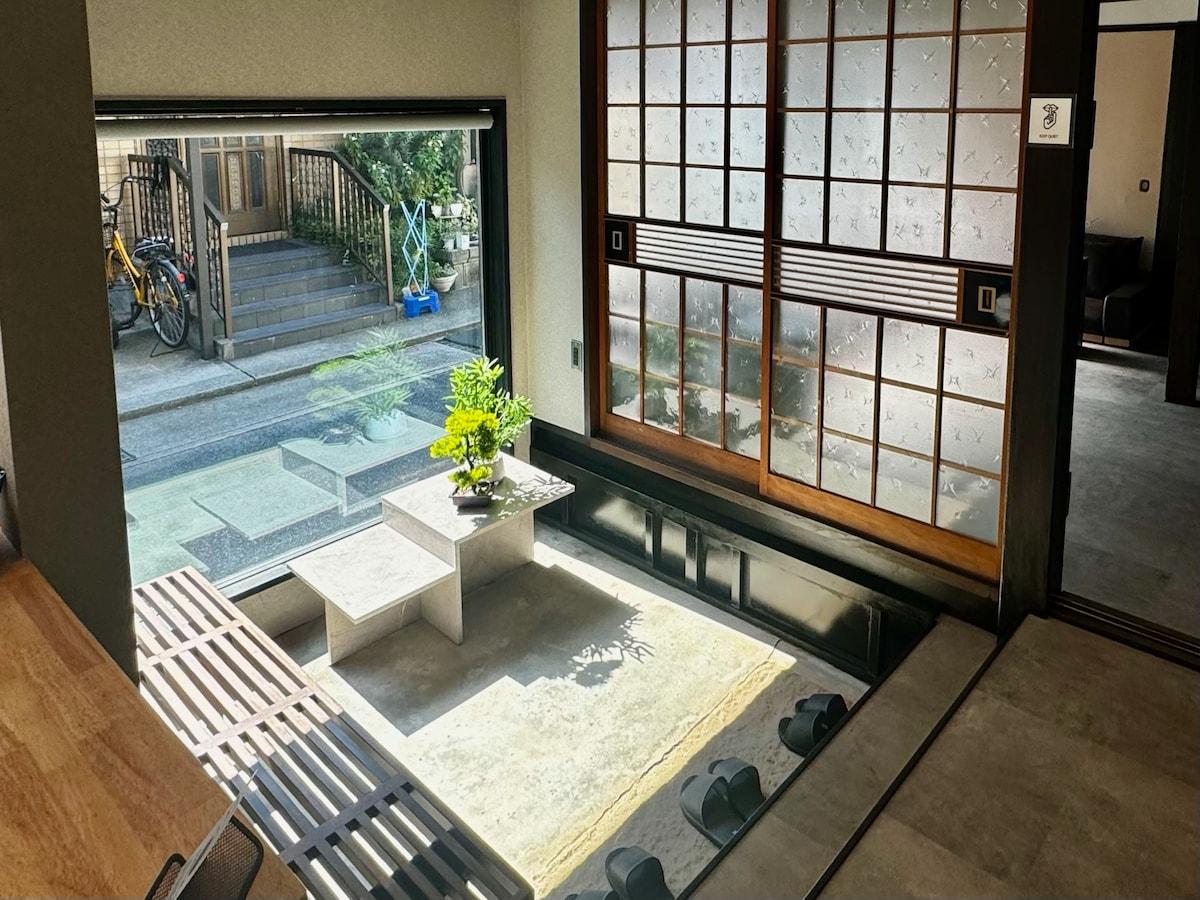
Wet umbrellas remain outside the living space. Sandals carrying dust from temple paths or Tokyo sidewalks stop at the lower floor. Shopping bags are placed briefly before being carried inside. Sometimes a small fan circulates air near the entrance, and towels wait nearby after a long afternoon outdoors.
None of these details feel accidental. The entrance protects not only cleanliness but atmosphere. Crossing that single wooden step often feels like stepping into a cooler, calmer world.
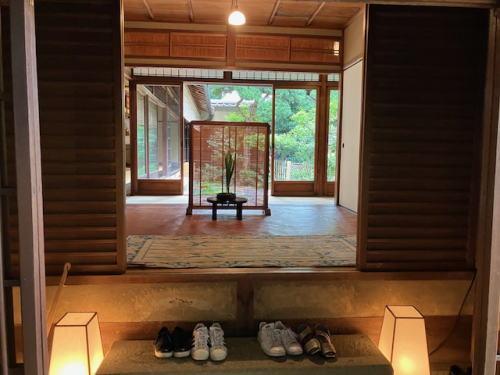
The Invisible Boundary
Japanese design frequently celebrates boundaries instead of eliminating them.
Sliding paper screens soften light rather than blocking it.
Garden paths reveal landscapes gradually instead of all at once.
The genkan does something similar with everyday life. Outside exists movement, schedules, noise, obligations. Inside exists stillness.
The physical elevation of the floor reinforces this distinction. Even a difference of just a few centimeters creates an unmistakable psychological shift.
Architecture becomes behavior.
Why It Feels Different
Many modern homes around the world have become increasingly open. Living rooms merge with kitchens. Entrances disappear into large continuous spaces. Convenience replaces ceremony.
The Japanese entrance resists this trend. By asking residents and guests to perform one deliberate action before entering, the home establishes rhythm before comfort.
It's remarkably effective. Visitors often describe Japanese houses as peaceful without immediately understanding why. The answer is rarely found in expensive materials or minimalist decoration alone.
Peace begins before you fully enter.
Living More Slowly
After returning home from Japan, many travelers find themselves unconsciously recreating small pieces of the genkan.
A dedicated place for shoes. An umbrella stand.
A bench near the entrance. Even simply pausing for a moment before walking inside.
These aren't attempts to imitate Japanese aesthetics. They're reminders that transitions deserve attention.
The spaces between activities often shape the quality of everything that follows.
Final Thoughts
The genkan proves that architecture doesn't need grand gestures to change human behavior.
Perhaps that's why the Japanese entrance continues to fascinate architects, designers, and travelers alike. It reminds us that the most meaningful spaces are often not the rooms we live in, but the thresholds that prepare us to enter them..